Why is my lift making a high-pitched noise? It may be asking for attention before a minor defect becomes an expensive repair. A sharp squeal can come from dry guide shoes, worn bearings, loose panels, or a strained traction component. The sound may appear during upward travel, braking, door movement, or while the lift stands still. Each timing clue matters.
Lift engineer David Cooper puts it plainly: “Noise is often the first warning, not the final diagnosis.” This practical view is important. A high-pitched tone does not identify one failed part. It only shows that vibration, friction, or electrical activity may be present. A trained technician should compare the sound with the lift’s movement, age, maintenance history, and control system. A brief recording can help, but it cannot replace an inspection.
Listen carefully. Note the floor, direction, speed, and duration. Does the pitch rise near the landing? Does it stop when the doors close? These details can save time during maintenance. Do not remove covers or enter restricted machinery spaces. Even a quiet lift can contain moving parts and dangerous electrical energy. If the noise is accompanied by shaking, burning smells, delayed doors, or uneven stopping, remove the lift from service and contact a qualified contractor.
There is room for uncertainty here. Some harmless sounds resemble serious faults, while small noises can develop quickly. This guide explains likely causes, safe checks, and professional repair decisions without guessing beyond the evidence.
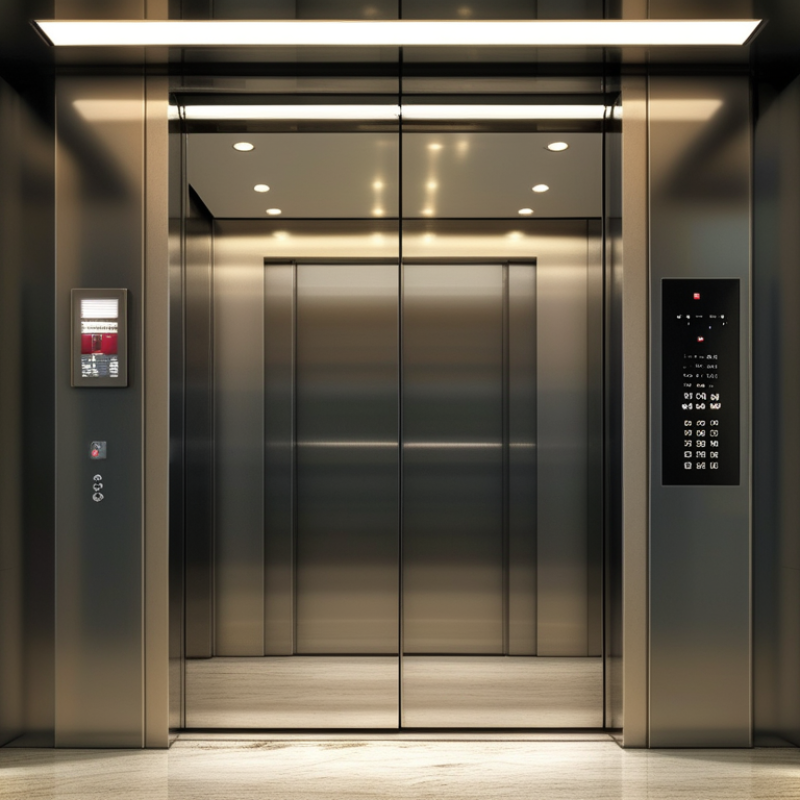
A high-pitched lift noise should be investigated by sound and timing, not guesswork. Stand outside the lift safely and listen during door opening, closing, starting, stopping, and travel. Note the exact moment it begins. Does it rise with speed? Does it stop when the doors are fully open? These patterns often reveal the likely area.
A squeal during door movement may point to dry rollers, a dirty track, or alignment trouble. A steady whine during travel can suggest motor, brake, or control equipment issues. Noise from the machine room deserves prompt attention. Vibrations through the wall can also mislead you. Sound travels strangely through metal shafts.
Record a short video from a safe public area, then compare the noise at different floors. Write down the date, direction, load, and weather conditions. Small details matter. A half-full lift may sound different from an empty one. I have seen inspections focus on the motor while a loose panel caused the sharpest noise.
Do not remove covers or enter restricted areas. A qualified lift technician should inspect bearings, door components, brakes, and electrical systems using approved procedures. Tell them whether the noise is new, intermittent, or getting louder. Avoid spraying household lubricant into visible gaps. It may hide the symptom and contaminate sensitive parts. My early assumptions have been wrong before, so repeat the observation carefully.
A high-pitched noise from a lift often points to an electrical problem, especially when the sound changes during starting or stopping. Check the power supply before inspecting mechanical parts. A qualified technician should measure incoming voltage, phase balance, and grounding with calibrated instruments. Loose terminals may create a sharp electrical tone and produce heat around the connection. Turn off and isolate the lift before opening any electrical enclosure.
The control components deserve close attention. Listen near the control panel, inverter, relays, and contactors while the lift operates under controlled conditions. A high-frequency sound may come from an aging cooling fan, a strained relay coil, or abnormal inverter switching. Inspect for darkened terminals, melted insulation, vibration marks, and unusual dust around ventilation openings. Do not rely on sound alone. I have seen a clean-looking panel hide a loose connection beneath its cover.
Power quality can also affect control behavior. Record voltage readings during acceleration, travel, and braking, because a stable reading at rest may be misleading. Compare the results with the lift manufacturer’s service specifications and local electrical requirements. If the noise began after maintenance, review recent wiring changes carefully. One overlooked connector can imitate a failing control board. Only trained personnel should test live circuits, and damaged components should be replaced rather than bypassed. The lift should remain out of service when burning smells, repeated faults, or uncontrolled movement appear.
How to Fix a Lift Making a High Pitched Noise?
A high-pitched lift noise often comes from moving parts, cables, or door mechanisms. Listen carefully during upward travel, downward travel, and door movement. A sharp squeal may indicate dry guide shoes, worn rollers, damaged bearings, or misaligned tracks. Inspectors should also check sheaves and cable contact points for uneven wear, rust, or rubbing marks. Do not assume the cable is responsible. That shortcut can mislead the diagnosis.
Door mechanisms deserve close attention. Door rollers, hinges, locks, and tracks can create a piercing sound when dirt builds up or alignment changes. Open and close the doors several times, while observing vibration and delayed movement. A simple recording can help a qualified technician compare the sound later. However, phone microphones may distort high frequencies. The result is useful, but imperfect.
The National Institute for Occupational Safety and Health identifies 85 dBA over eight hours as a recommended exposure limit. Its research also notes that roughly 22 million U.S. workers face hazardous workplace noise each year. Measure unusual lift noise when possible, especially near the machine room. Under ASME A17.1/CSA B44 safety requirements, inspection and repair should be handled by trained personnel. They may isolate the equipment, examine cable tension, and verify door clearances. Never enter a shaft or apply lubricant without the approved maintenance procedure. A quiet lift is not automatically a safe lift.
Inspect moving parts, cables, and door mechanisms. The chart shows a mathematically generated 4 kHz reference waveform, which is within the human audible range of approximately 20 Hz–20 kHz. Use a calibrated microphone and qualified technician to compare the actual sound before servicing.
A persistent high-pitched sound may come from door rollers, guide shoes, bearings, sheaves, or cable contact. Power isolation and professional inspection are required before accessing moving components.
How to Fix a Lift Making a High-Pitched Noise?
A high-pitched lift noise often points to friction, vibration, or electrical strain. Do not ignore it. Record when the sound starts, such as during acceleration, braking, or door movement. Note changes after rain, heavy use, or long periods of idleness. This information helps a qualified lift technician test the correct components instead of guessing.
The technician should isolate the lift before inspection. They may check pulley bearings, guide shoes, door rollers, brake surfaces, and motor bearings. A loose panel can create a sharp ringing sound, while worn bearings may produce a steady whistle. Electrical tests can reveal abnormal current or inverter-related noise. Never spray lubricant into an unknown area. It may hide the fault and contaminate a brake or sensor. A small mistake can become expensive.
Some components only need cleaning, alignment, tightening, or approved lubrication. Damaged bearings, cracked rollers, worn brake parts, and distorted sheaves usually require replacement. The technician should compare measurements with the lift manufacturer’s service data and inspect related parts for secondary damage. After repair, the lift needs controlled no-load and loaded tests, including several starts and stops. The sound may disappear temporarily, which is not proof of a complete repair. I have seen quiet equipment return with a deeper vibration days later, so follow-up checks matter.
After repairing a lift that produced a high-pitched noise, verify safe operation before returning it to service. The noise may come from a slipping belt, dry bearing, misaligned guide, or electrical component. Do not judge success by silence alone. A quiet lift can still have unsafe movement. Apply lockout procedures during inspection, as required by OSHA’s control-of-hazardous-energy standard, 29 CFR 1910.147. Confirm that guards, fasteners, sensors, and covers are correctly restored. Stop the lift.
Run several unloaded cycles from every served floor. Watch door timing, stopping accuracy, vibration, acceleration, and unusual heat. Listen near the machine area, car roof, and landing doors. Then perform the manufacturer’s approved load test with trained personnel. Check emergency communication, alarm functions, door reversal, leveling, and manual release controls. A slight floor-leveling error may seem harmless, yet it can create a trip hazard. Recheck it.
The U.S. Consumer Product Safety Commission has estimated about 17,000 elevator and escalator injuries requiring emergency treatment each year, with roughly 30 related deaths annually, based on historical national data. That figure supports careful post-repair verification, not rushed handover. Record sound observations, test results, fault codes, and the technician’s authorization. If the high pitch returns only under load, investigate further. My practical warning is simple: intermittent noise is easy to dismiss, and that is where judgment can fail. Keep the lift out of public use until a competent professional confirms compliance with applicable safety codes, including ASME A17.1/CSA B44 where relevant.
| Inspection Area | Possible Source of High-Pitched Noise | Repair or Verification Action | Safe Result to Confirm | Status |
|---|---|---|---|---|
| Drive motor and bearings | Bearing wear, inadequate lubrication, shaft misalignment, or electrical noise from the motor | Isolate power before inspection. Check for excessive play, overheating, abnormal vibration, and damaged bearings. Lubricate only where the lift service procedure permits. | No abnormal vibration, overheating, burning smell, or recurring tonal noise during operation. | Pending |
| Hydraulic pump and fluid system | Cavitation caused by low fluid level, restricted inlet flow, air in the system, or a clogged filter | Check the fluid level and condition, inspect the inlet line and filter, and bleed air only according to the approved service procedure. | Smooth raising and lowering with no whining, foaming fluid, jerking, or pressure instability. | Pending |
| Belts, pulleys, and drive chains | Excessive tension, belt slip, pulley misalignment, worn grooves, or dry chain links | Inspect alignment, tension, wear, and fasteners. Adjust or replace components using the lift manufacturer’s service requirements. | No visible fraying, cracking, excessive slack, lateral movement, or squealing during a full travel cycle. | Pending |
| Guide rails, rollers, and sliding surfaces | Dry guide surfaces, contaminated rollers, damaged guide shoes, or rail misalignment | Clean the surfaces, inspect rollers and guide shoes, and apply only the specified lubricant where lubrication is permitted. | Lift movement is even and quiet, with no scraping, binding, side-to-side movement, or abnormal resistance. | Pending |
| Safety locks and mechanical restraints | Lock pawl contact, spring damage, poor alignment, or debris around the locking mechanism | Inspect and function-test the locks without placing any person beneath an unsupported platform or load. | Locks engage and release correctly, with no grinding, sticking, delayed engagement, or damaged components. | Pending |
| Limit switches and position sensors | Misadjustment, loose wiring, switch contact vibration, or sensor interference | Check mounting, wiring, actuation, and control-panel fault indications. Test upper and lower travel limits at low risk and under controlled conditions. | Lift stops at the intended limits, controls respond correctly, and no fault remains active. | Pending |
| Electrical connections and controls | Loose terminals, damaged insulation, inverter switching noise, or an overloaded motor | Have a qualified person isolate and inspect the electrical system. Tighten connections to the specified torque and check protective devices. | No exposed conductors, arcing, hot terminals, unexpected resets, or persistent electrical alarm. | Pending |
| Fasteners, guards, and covers | Loose covers or guards vibrating at the operating frequency | With power isolated, inspect mounting bolts, panels, guards, and access covers. Replace damaged hardware and reinstall all protective covers. | No rattling or resonance, and all guards and covers are secure before the lift is returned to service. | Pending |
| No-load functional test | Noise that appears only during movement or at a specific travel position | Run several controlled raise-and-lower cycles with no person on or beneath the lift. Observe sound, speed, stopping, and vibration. | Movement is controlled and repeatable, with no new noise, hesitation, uneven travel, or unintended stopping. | Pending |
| Rated-load verification | Noise or instability that occurs only under load | Use only an approved test load and follow the applicable service and inspection procedure. Do not exceed the rated capacity. | The lift raises, holds, and lowers the approved test load without abnormal noise, drift, overload indication, or structural movement. | Pending |
| Emergency stop and secondary safety systems | Repair work may have affected control logic or safety circuits | Test the emergency stop, interlocks, alarms, and other installed protective devices according to the approved procedure. | Emergency stop removes motion as intended, interlocks prevent unsafe operation, and the lift cannot run with a required guard or access condition open. | Pending |
| Final return-to-service inspection | Residual fault, incomplete reassembly, or unresolved recurring noise | Record the repair, test results, parts replaced, technician details, date, and any follow-up requirement. Escalate unresolved noise to a qualified lift technician. | All safety devices pass, the noise source is corrected or formally assessed, and the lift is released only by an authorized competent person. | Pending |
: Dry guide shoes, worn rollers, damaged bearings, slipping belts, or misaligned tracks may create sharp sounds. Not always the cable.
Listen during upward travel, downward travel, and door movement. Observe when the sound starts. This comparison may reveal the affected mechanism.
They should check sheaves, cable contact points, rust, rubbing marks, and uneven wear. Cable tension also deserves inspection. Assuming the cable is guilty can mislead the diagnosis.
Yes. Dirt, worn rollers, hinges, locks, or misaligned tracks can create high-pitched sounds. Open and close the doors repeatedly. Watch for vibration or delayed movement.
A recording can help a qualified technician compare the noise later. Phone microphones may distort high frequencies. Useful, but imperfect.
No. Only trained personnel should inspect or lubricate parts under an approved procedure. Do not enter the shaft. Improvised maintenance can create additional hazards.
Run several unloaded cycles from every served floor. Check door timing, stopping accuracy, leveling, vibration, acceleration, and unusual heat. Silence alone proves little.
Trained personnel should test alarms, emergency communication, door reversal, manual release controls, and approved load performance. Restore every guard, cover, fastener, and sensor. Recheck floor leveling.
Keep the lift out of public use and arrange further professional investigation. Record the sound, test results, and fault codes. Intermittent noise is easy to dismiss. That judgment may fail.
A high-pitched sound from a lift can indicate anything from a minor vibration to an issue with its electrical or mechanical systems. If you are asking, “Why is my lift making a high-pitched noise?”, begin by identifying when the sound occurs—during starting, stopping, travel, door movement, or while the lift is idle. This pattern can help narrow down the source. Check the power supply, control components, and warning indicators for irregularities, but avoid opening electrical panels unless you are qualified to do so.
Next, inspect accessible moving parts, cables, rollers, guides, and door mechanisms for unusual wear, friction, looseness, or poor alignment. A trained lift technician should test the system and repair or replace any faulty components using suitable parts and procedures. After the repair, the lift should be operated through several complete cycles to confirm that the noise has stopped and that the doors, controls, leveling, and emergency features work correctly. If the sound is sudden, worsening, or accompanied by vibration, stop using the lift and arrange a professional inspection.

Kathy lift