2026 Best Scissor Lifts for Uneven Ground Can I Use One?

Time:2026-09-30 Author:Amelia
0%

Can I use a scissor lift on uneven ground? Sometimes—but only when the lift is designed for that terrain, the surface can support its load, and its operating limits are respected. A smooth-looking yard can hide soft fill, a drain cover, or a rut beneath one wheel. That detail matters.

OSHA’s Scissor Lift Safety guidance reports 22 worker deaths in scissor-lift incidents from 2003 through 2011, identifying tip-overs among the hazards. The figure is older, but the lesson remains relevant: stability is not something to judge by eye. A raised platform can shift if the ground slopes or settles. Rough-terrain models may include four-wheel drive, oscillating axles, or outriggers. These features do not override the manufacturer’s limits for slope, load, or setup. Not a guarantee.

This guide compares 2026 scissor lifts intended for uneven ground and explains when ordinary slab models may be unsuitable. It examines ground clearance, tire type, drive configuration, platform capacity, gradeability, and support requirements. A compact unit may be easier to position, yet narrow tires can concentrate weight on weak soil. Check the manual and assess the work area before choosing. No model makes unstable ground safe by itself. I’d also be cautious about treating “rough-terrain” as permission to work anywhere; that assumption is easy to make, and worth reconsidering.
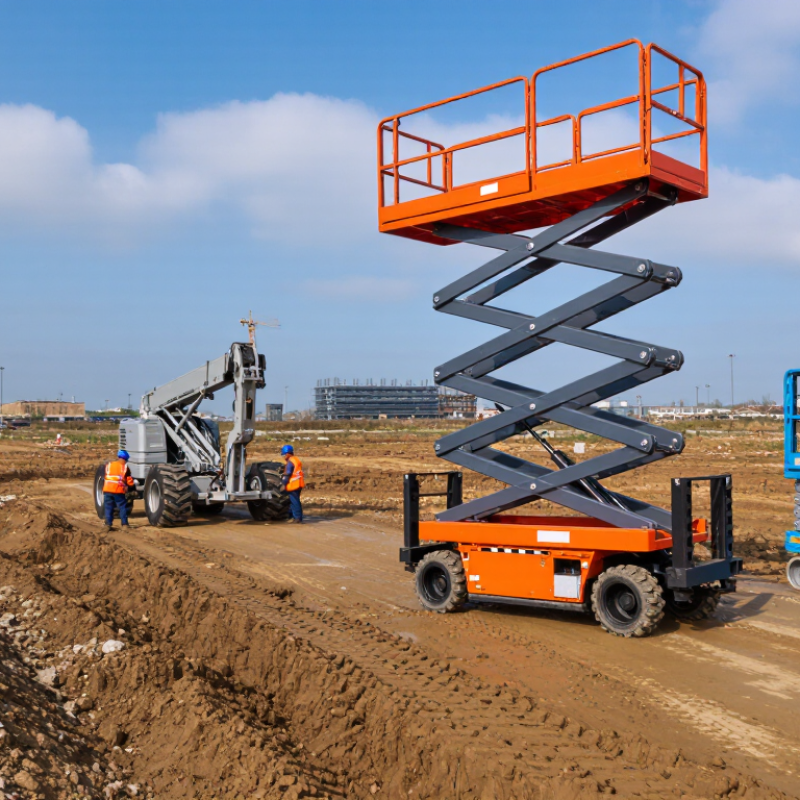
2026 Best Scissor Lifts for Uneven Ground Can I Use One?

What Counts as Uneven Ground for a Scissor Lift?

2026 Best Scissor Lifts for Uneven Ground: Can I Use One?

What Counts as Uneven Ground for a Scissor Lift?

Uneven ground is more than a visible slope. It includes potholes, ruts, loose gravel, soft soil, standing water, debris, and sudden surface changes. A concrete slab may look flat but still contain a dangerous cross-slope. Small wheel movements can shift the platform’s center of gravity.

A practical check starts with the operator’s manual and a site assessment. Measure the slope, inspect soil firmness, and look for hidden voids near trenches or drainage channels. Rough-terrain scissor lifts may handle limited slopes, but only within their rated limits. Outriggers do not turn unstable soil into a safe foundation. They can also sink unevenly.

Do not trust your eyes alone. I would not.

The ANSI/SAIA A92 series identifies surface conditions, slope limits, and machine configuration as essential operating factors. OSHA guidance also requires inspections and operation according to the manufacturer’s instructions. IPAF’s Global Safety Report 2024 recorded 118 fatal MEWP incidents worldwide during 2023, showing why ground assessment cannot be treated as paperwork.

A lift may be suitable when the surface is firm, compact, and within the stated slope limit. Stop when wheels sink, the chassis rocks, or the alarm activates. Recheck after rain, excavation, or heavy vehicle traffic. My first judgment can be wrong, especially when a smooth surface hides weak ground.

How Scissor Lifts Adapt to Slopes and Rough Terrain

How Scissor Lifts Adapt to Slopes and Rough Terrain

A scissor lift can work on uneven ground, but only when its design matches the site. Rough-terrain models use larger tires, stronger frames, and automatic leveling systems. Some units compensate for limited slopes with hydraulic outriggers. Others allow travel only when the platform is lowered.

Check the slope rating first. The manufacturer’s manual remains the controlling source, not a sales description. OSHA requires mobile scaffolds to remain level, plumb, and secured against unintended movement. On a real site, loose gravel can shift beneath one tire. That small change can alter the machine’s stability quickly. Stop work if the level alarm activates. Never defeat it.

Industry data supports caution. The IPAF Global Safety Report 2024 recorded 118 powered-access fatalities across 20 countries during 2023. Falls from height and overturns remain recurring hazards. Those figures do not prove every rough-terrain lift is unsafe. They show why ground assessment matters. Operators should inspect drainage, hidden voids, ruts, and compacted soil before driving. A spotter can watch wheel movement near edges and trenches.

I have seen operators focus on platform height and overlook ground pressure. That is an easy mistake. Stabilizers may need firm pads, while leveling systems have operating limits. Wet clay can look solid in the morning and fail after rain. Use the lift only within its rated slope, wind, load, and surface conditions. If the site exceeds those limits, a different access method may be safer.

Which Scissor Lift Types Are Designed for Uneven Ground?

2026 Best Scissor Lifts for Uneven Ground: Can I Use One?

Uneven ground requires a rough-terrain scissor lift, not a standard indoor model. Rough-terrain units usually have four-wheel drive, larger tires, stronger ground clearance, and an oscillating axle. Some also include hydraulic outriggers or automatic leveling systems. These features help the machine stay stable on gravel, compacted soil, and mild slopes.

A slab scissor lift is generally designed for smooth, firm floors. Its small solid tires and limited clearance can become unsafe on ruts or loose surfaces. The platform may appear level while the chassis remains unstable. That detail is easy to miss. The IPAF Global Safety Report 2024 recorded 118 reported MEWP fatalities across 34 countries during 2023. It identifies overturns and falls among serious incident risks, reinforcing the need for proper ground assessment.

Tips: Check the operator manual before entering uneven areas. Measure slope, inspect hidden voids, and confirm the surface can support each wheel. Use the machine’s leveling system only within its rated limits. Never treat outriggers as a replacement for stable ground. Keep the platform lowered while traveling, and stop when tires sink, bounce, or lose traction. A trained operator should also verify wind limits, load capacity, and overhead hazards. Even experienced crews can misjudge wet soil after rain. That deserves a second inspection.

How to Choose the Right Scissor Lift for Your Worksite

Can I use a scissor lift on uneven ground? Yes, but only when the machine is designed for rough terrain and the surface meets its operating limits. Choosing the right model starts with the worksite, not the advertised platform height. Walk the travel route and identify slopes, potholes, loose gravel, mud, and hidden voids. Measure the steepest section. A lift that feels stable on firm ground may behave differently near an edge.

Match the lift’s capacity to the full load, including workers, tools, and materials. Check platform size, lifting height, turning space, and indoor or outdoor use. Rough-terrain models may include larger tires, oscillating axles, and leveling systems. These features help, but they do not defeat unstable soil. Confirm the maximum grade, wind limits, and leveling requirements in the operating manual. Use suitable ground protection when the surface feels soft. Never guess.

Before each shift, inspect tires, guardrails, controls, alarms, hydraulic lines, and emergency lowering functions. Test the controls from level ground. Keep overhead hazards visible, especially when the platform rises beside trees or unfinished structures. Operators need documented training and hands-on practice for the exact equipment type. I once underestimated how quickly a loaded platform changes handling during repositioning. That mistake was useful, but avoidable. Lower the platform before moving, keep the load centered, and stop when conditions change. Not every uneven site needs a lift.

2026 Best Scissor Lifts for Uneven Ground: Can I Use One?

Typical rated platform-capacity ranges by lift type (lb)

How to choose: A rough-terrain scissor lift is generally the appropriate type to consider for uneven outdoor worksites, but it must only be operated on surfaces within that exact model’s limits. These broad capacity ranges are representative examples from common model specifications, not guaranteed limits for every lift. Check the machine’s rated capacity, slope limits, ground conditions, and operating instructions before use.

What Safety Checks Are Needed Before Operating on Uneven Terrain?

Uneven ground does not automatically rule out a scissor lift. However, the machine must be designed and approved for that terrain. Read the operator’s manual before moving it. Check the slope limits, platform height limits, and required ground conditions. Walk the work area carefully. Look for potholes, loose gravel, mud, hidden voids, and recently filled trenches. Soft soil may appear stable until the wheels carry the full load.

Inspect the tires, steering, brakes, guardrails, gates, and platform controls. Test the emergency lowering system and warning alarms before raising the platform. Confirm that outriggers or automatic leveling systems work correctly, if fitted. Keep the load below the rated capacity, including tools and materials. Never depend on a level sensor alone. It cannot detect every weak surface. A rushed inspection may look complete while missing one dangerous edge. That mistake is worth reflecting on.

Tips: Park only where the surface can support the machine. Keep the platform lowered while traveling. Do not exceed the manufacturer’s slope limit. Stop during strong winds, lightning, or poor visibility. Use trained operators and follow local workplace rules. If the ground changes, stop and reassess. When doubt remains, choose a firmer work position or consult a qualified safety professional.

FAQS

Can a scissor lift operate on uneven ground?

Yes, if it is designed for rough terrain and the surface stays within its rated limits. Check the manual before entering the area.

What features help on rough terrain?

Larger tires, four-wheel drive, higher ground clearance, and oscillating axles can help. Some lifts also use outriggers or automatic leveling systems.

Can a standard slab lift work on gravel or ruts?

Usually not. Small solid tires and limited clearance suit smooth floors, not loose gravel or uneven soil.

What should operators inspect before driving?

Check slopes, potholes, drainage, ruts, and hidden voids. Look closely at the ground beneath each wheel.

When should work stop?

Stop if the level alarm activates, tires sink, bounce, or lose traction. Never bypass an alarm.

Do outriggers make unstable ground safe?

No. They need firm support and must stay within their operating limits. Soft soil can still shift beneath them.

What limits should operators confirm in the manual?

Verify slope, load, wind, and leveling limits. Include workers, tools, and materials when calculating the load.

What should happen before moving the lift?

Lower the platform, center the load, and check the route. Wet soil deserves another look after rain.

What inspections matter before each shift?

Inspect tires, guardrails, controls, alarms, hydraulic lines, and emergency lowering functions. Test controls on level ground.

Conclusion

Uneven ground includes slopes, loose soil, gravel, potholes, muddy areas, and surfaces with sudden changes in elevation. Can I use a scissor lift on uneven ground? The answer depends on the machine’s design, operating limits, and the conditions at the worksite. Rough-terrain scissor lifts are generally built with stronger frames, larger tires, greater ground clearance, and leveling systems that help improve stability on challenging surfaces. However, these features do not make every slope or soft area safe.

Choosing the right lift requires checking the required platform height, load capacity, slope rating, terrain condition, and available space. Before operation, inspect the ground for weak spots, obstacles, standing water, and excessive inclines. Confirm that the lift is properly positioned, all stabilizing or leveling systems are engaged, and safety controls function correctly. Operators should follow the equipment manual, wear required protective equipment, keep the platform within its rated capacity, and stop work whenever ground conditions become unstable or visibility is limited.

Amelia

Amelia

Amelia is a seasoned marketing professional with a wealth of expertise in our company’s core offerings. With an unwavering passion for driving growth and innovation, she plays a pivotal role in shaping our marketing strategies and enhancing brand visibility. A key aspect of her responsibilities......