How to Calculate the ROI of a Warehouse Cargo Lift?

Time:2026-11-25 Author:Mason
0%

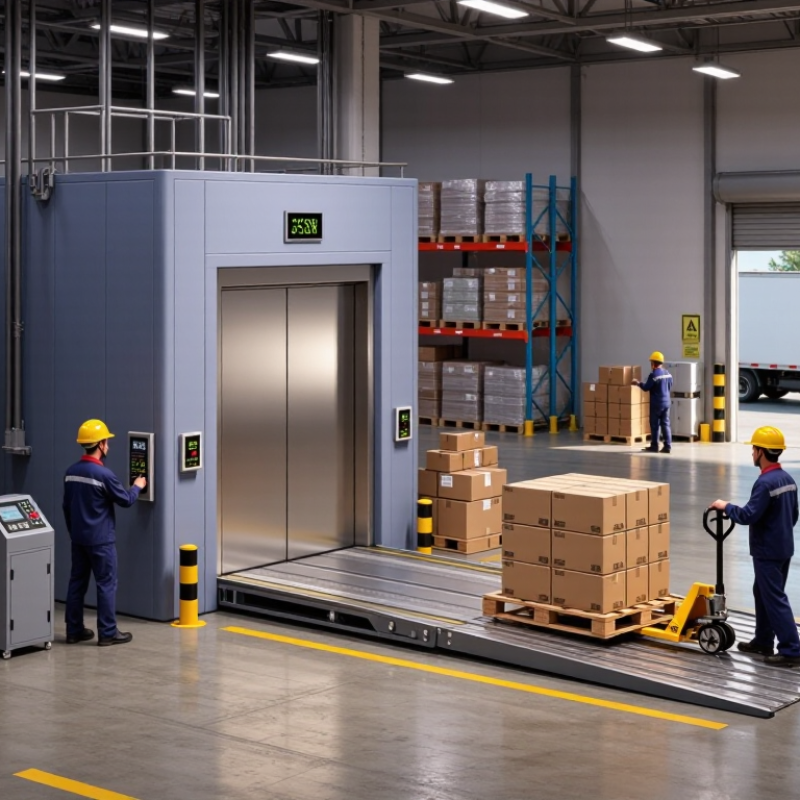
A warehouse cargo lift can change more than the way goods move between floors. It may reduce manual handling, shorten transfer times, and help staff keep orders moving during busy shifts. But the purchase price is only part of the decision. Installation, servicing, energy use, and occasional downtime also affect the real cost.

How to calculate the ROI of a warehouse cargo lift? Start by comparing the lift’s total annual benefits with its full operating and ownership costs. Benefits may include fewer labor hours spent moving pallets, less equipment use, and faster access to upper-level storage. For example, record how long a typical transfer takes before installation, then compare it with measured lift times. Use actual shift data where possible; optimistic estimates can make an investment look better than it is.

A useful assessment also considers how often the lift will be used and whether it fits the warehouse workflow. A lift that sits idle for half the day may not deliver the expected savings. Include routine inspections and repairs in the calculation, even when exact costs are not yet known. A range of estimates is more honest than a single confident figure. Small details matter. The goal is not to promise a quick payback, but to make the assumptions visible and test whether the lift can produce reliable value over time.
How to Calculate the ROI of a Warehouse Cargo Lift?

Define Lift Scope, Rated Capacity, and Annual Operating Hours

How to Calculate the ROI of a Warehouse Cargo Lift?

Define the lift’s scope before comparing costs and savings. Note the floors served, travel distance, loading points, and goods moved. A lift used between a receiving dock and one mezzanine has a different workload from one serving several storage levels. Record the current process, including travel time, labor involved, and delays during busy periods. These details help prevent a broad estimate from hiding practical costs.

Check the rated capacity against real loads, not just the heaviest item on paper. Weigh typical pallets and record peak loads, including packaging or containers. The lift must safely handle the planned load and loading method. A higher rating may add purchase and installation costs without improving daily output. Annual operating hours matter too. Use shift schedules and operating logs to estimate productive hours, excluding idle periods and planned maintenance. Include seasonal changes where possible. The records may be imperfect; note that uncertainty rather than treating the estimate as fact.

Tips: Track lift cycles for several representative weeks. Compare measured labor time before and after installation, and include maintenance and energy costs in the ROI estimate. Recheck assumptions after the first few months. Actual use may differ from the plan.

Measure Baseline Trips, Handling Time, and Labor Hours per Shift

Before estimating ROI, observe normal warehouse work for several representative shifts. Log every vertical cargo movement, including empty returns and partial loads. Record trips per shift and note rush periods, such as the hour before dispatch. Memory is unreliable. The first log may be messy, but it is more useful than a confident guess.

Time each trip from staging the load to clearing the landing. Include loading, travel, unloading, and waiting for access. Record the minutes and the number of workers actively handling the load. Calculate baseline labor hours per shift as trips × minutes per trip × workers, divided by 60. For example, 24 trips at six minutes with two workers equals 4.8 labor hours. Use the same method after installation and compare similar shifts. A quiet Tuesday is not a fair match for a busy Friday.

To estimate annual savings, multiply the labor hours saved per shift by the loaded hourly wage and annual shifts. Be careful: freed time is not automatically cash savings. It becomes a financial benefit when it reduces overtime or supports useful work elsewhere. Subtract recurring energy and maintenance costs, then compare annual net savings with the lift’s installed cost. Keep assumptions visible; a few unusually slow trips can distort the result.

Estimate Labor Savings Using BLS Wage Data and Facility Throughput

A warehouse cargo lift’s labor value starts with measured cycle time, not a vendor estimate. Record daily pallet moves, workers involved, and minutes spent carrying loads between levels. The U.S. Bureau of Labor Statistics’ May 2023 Occupational Employment and Wage Statistics report lists a $36,390 annual median wage for hand laborers and material movers, or about $17.50 per hour. Consider a facility moving 60 pallets daily, where a lift saves three labor-minutes per pallet across 250 operating days. That equals 750 hours annually. At an assumed 30% payroll burden, the estimated labor value is about $17,060 per year. Treat this as a working estimate. Not every saved minute becomes a real payroll reduction.

Check the lift’s impact against actual throughput logs and staffing records. MHI’s 2024 Annual Industry Report discusses labor challenges and automation, supporting a joint review of staffing and material flow. Compare baseline and post-installation time for the same routes, shifts, and pallet mix; seasonal peaks can distort a short trial. Then calculate ROI as (annual labor savings minus annualized equipment cost and maintenance) divided by installed cost. Include training, downtime, and any added handling steps. A faster transfer is useful. But if workers simply wait elsewhere, the projected savings need another look.

Add Installed, Maintenance, and Energy Costs Using EIA Rate Data

A warehouse cargo lift’s ROI depends on more than its purchase price. Record the installed quote, including freight, electrical work, permits, and commissioning. Then estimate annual labor savings from fewer manual transfers. Subtract scheduled inspections, repairs, and energy use. The U.S. Energy Information Administration reported an average commercial electricity price of 12.75 cents per kilowatt-hour in 2023. For a lift using 4,000 kWh yearly, that equals about $510 at the national average. Use the EIA’s state-level rate for a more relevant estimate. Calculate simple payback by dividing installed cost by annual net savings.

For example, a $90,000 installed lift that saves $18,000 in labor annually, with $2,000 maintenance and $510 electricity costs, yields about $15,490 in net annual savings. Simple payback is roughly 5.8 years. This is only an illustration; shift patterns, load weight, and downtime can change the result. The U.S. Department of Energy’s Operations & Maintenance Best Practices guide emphasizes planned maintenance as part of managing equipment performance and lifecycle costs. Obtain a service estimate based on the lift’s actual duty cycle.

Tips: Multiply motor kilowatts by operating hours, then adjust for typical load and idle time. Compare EIA rates by state and year. Keep a repair reserve. That estimate can still miss a busy season.

Calculate Annual ROI, Payback Period, and 5-Year Net Present Value

To estimate a warehouse cargo lift’s annual return, compare measurable yearly benefits with its full installed cost. Include labor hours saved, fewer product-handling incidents, and extra throughput only when it creates real value. Subtract electricity, inspections, maintenance, and any added downtime. Use real shift data. For example, a $120,000 installation might save $48,000 in labor and $12,000 in handling losses, while adding $18,000 in annual throughput value. After $18,000 in operating costs, net annual benefit is $60,000. Annual ROI is $60,000 divided by $120,000, or 50%.

Payback period is the initial investment divided by annual net benefit. In this example, payback takes two years. That estimate assumes savings begin immediately and remain steady, which may be too optimistic during ramp-up. Check the figures against actual wage rates, lift utilization, maintenance quotes, and seasonal volume. A lift that stands idle between peaks may not deliver the modeled labor savings.

For a five-year net present value, discount each year’s net cash flow to today, then subtract the initial cost. At an 8% discount rate, five annual benefits of $60,000 have a present value of about $239,600. Subtracting $120,000 gives an NPV near $119,600. A positive result suggests the project clears that return threshold, not that every forecast is reliable. Test lower utilization, higher repair costs, and delayed commissioning; small changes can alter the decision.

FAQS

How can a warehouse estimate labor savings from a cargo lift?

Record pallet moves, workers involved, and minutes spent moving loads between levels. Compare the same routes and shifts after installation. Check the logs.

What does saving three minutes per pallet mean in a sample facility?

Moving 60 pallets daily for 250 days saves 750 labor hours yearly. At $17.50 per hour and a 30% payroll burden, that is about $17,060. It is an estimate.

Do saved labor minutes always reduce payroll costs?

No. Workers may spend that time on other tasks instead. A faster transfer alone does not prove lower payroll costs.

What should a lift’s annual costs include?

Include electricity, inspections, maintenance, training, downtime, and any extra handling steps. Small expenses can add up.

How is annual ROI estimated?

Subtract annual operating costs from measurable yearly benefits, then divide by installed cost. Count extra throughput only when it creates real value.

How long is the sample project’s payback period?

With a $120,000 installation and $60,000 in annual net benefits, payback is two years. That assumes savings start immediately.

How can a five-year NPV be estimated?

Discount each year’s net cash flow to today, then subtract the initial cost. At an 8% rate, the sample NPV is about $119,600.

What assumptions should be tested before approving a lift?

Test lower utilization, higher repair costs, seasonal volume changes, and delayed commissioning. An idle lift may miss its target. Recheck the forecast.

Conclusion

How to calculate the ROI of a warehouse cargo lift? Start by defining the lift’s scope, rated capacity, and expected annual operating hours. Then document current operations, including the number of trips, handling time, and labor hours required per shift. These baseline measures help estimate how a lift could change material movement and staffing needs. Use facility throughput and relevant BLS wage data to translate potential labor-hour reductions into annual savings, while keeping assumptions about utilization and productivity realistic.

Next, account for the full cost of ownership: installation, ongoing maintenance, and electricity use estimated with applicable EIA rate data. Compare these annual costs with the projected savings to calculate yearly ROI and the payback period. For a longer-term view, estimate the five-year net present value using consistent assumptions about costs, savings, and the discount rate. A clear calculation makes it easier to assess whether the lift fits the facility’s operational needs and financial goals.

Mason

Mason

Mason is a seasoned marketing professional with a deep expertise in the company's offerings and a passion for driving brand awareness. With a strong background in digital marketing strategies, he has an innate ability to connect with diverse audiences and effectively communicate product benefits.......